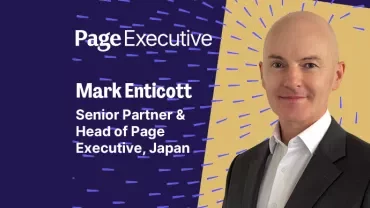
Looking to hire your next leader?
Get in touch with one of our consultants now to discuss your leadership talent requirements.

For many years, international mobility was almost a standard chapter in a senior executive career. A high-potential leader might move from Europe to Asia, from the US to an emerging market, or rotate across several countries on the journey towards a regional or global leadership role.
Today, that model is changing.
The rise of remote and hybrid working, geopolitical uncertainty, higher relocation costs and the continued localisation of leadership teams have all made companies more selective about moving executives internationally.
Yet there is an interesting paradox: at exactly the same time that broad-based mobility has become harder, the strategic need to move certain leaders has arguably become greater.
This is particularly visible in sectors where expertise is scarce, including AI, advanced technology and Healthcare & Life Sciences. Given the uneven level of development from region to region, specialized talents and executive leadership can bring value added support to the organization.
Executive mobility is becoming less about moving people because the organisation expects them to move, and more about moving very specific expertise to where the business needs it most.

Maria Karp
Partner, Page Executive
The first driver is straightforward: sometimes the talent simply isn't available locally.
Demand for niche expertise continues to outpace supply. Whether in drug delivery, AI governance or data security, sourcing talent across global markets is now a standard part of the search process for Page Executive daily practice.
BCG's work on the global competition for AI talent highlights how talent supply and demand are increasingly international. This creates an important implication for leadership teams: companies are not simply competing for talent within their own geography. They are competing within global pools of specialist expertise. (https://www.bcg.com/ja-jp/publications/2026/the-global-race-for-ai-talent-is-far-from-over)
The focus has shifted from accessing local talent to competing for global talent. From: “Who is the best person available in this market?” To: “Where is the best talent, what will it take to attract them, and how do we help them succeed within our organisation?”
Internal mobility is a strategic way to build capability, strengthen collaboration and transfer organisational knowledge across markets. By moving proven leaders within the business, organisations can enhance diversity, accelerate development and support sustainable growth.
External mobility plays a critical role when required capabilities do not exist internally. However, success is not defined by securing expertise alone. It depends on attracting talent that can adapt to the organisation's culture, build strong relationships and create sustainable impact, ensuring that capability transfer extends beyond the individual hire.
External mobility should be driven by cultural and strategic alignment, not just skills or domain expertise. Personal and family readiness are equally important to long-term success.
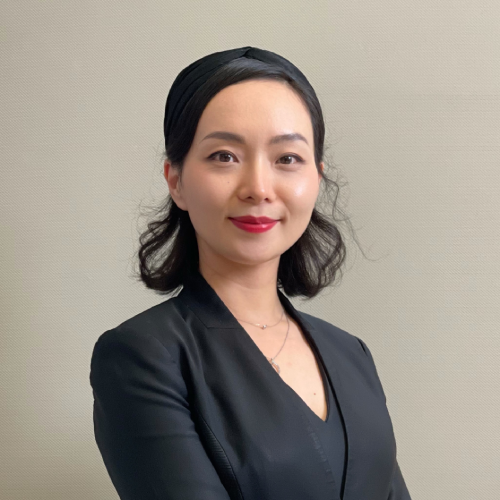
Annie Shen
Senior Partner, Page Executive
The HLS sector provides a fascinating example.
Asia's role within global biopharma innovation has evolved significantly. McKinsey has described Asia as an increasingly important part of biopharma's future, with China in particular becoming an important source of innovation. (https://www.mckinsey.com/industries/life-sciences/our-insights/the-emerging-epicenter-asias-role-in-biopharmas-future)
Consequently, executive mobility is beginning to work in both directions.
Historically, multinational healthcare businesses frequently transferred experienced leaders from US and Europe headquarters into China and other Asian markets. The objective was often to bring global governance, technical expertise and their operating models into a rapidly growing market.
Today, localisation means that many of those leadership positions can and should be filled locally.
But we are simultaneously seeing another movement: expertise originating in China and Asia becoming increasingly relevant globally.
Chinese life science companies expanding internationally need executives capable of bridging very different worlds: China and global markets, science and commercialisation, entrepreneurship and multinational governance. These talents bring the world class science, technology and modernized corporate operation expertise to the rest of the world.
This is where mobility becomes much more strategically important.
For Chinese HLS companies going global, the most valuable executive is often not simply someone with international experience. It is someone who can genuinely operate between two ecosystems.
Annie Shen
That distinction matters.
Hiring somebody who has worked in the US does not automatically give a Chinese business the leadership capability to succeed there. Equally, moving a global executive into China without understanding how decisions are made locally can create an expensive mismatch.
A leader who can bridge cultures and business landscapes is key to fostering seamless communication and cross-border success
Annie Shen
One of the biggest lessons from senior executive search is that mobility discussions need to happen much earlier than the offer stage.
We recently worked on a CEO search for a diagnostics start-up in Asia, relocating a senior executive from the US. Strategically, the match made sense. Both sides wanted to make it happen. The challenge emerged around something seemingly tactical: schooling costs.
The true cost of relocating the candidate and their family had not been fully researched or budgeted before the offer. For a start-up managing cash carefully, the difference was material. The result? Additional negotiation and, more importantly, an impact on the planned onboarding timeline.
The lesson was simple: You can successfully close a CEO on the vision and still lose them on the practicalities.
At C-suite level, family considerations are not peripheral to the hiring decision. They are part of it. Housing, schooling, tax, partner careers, healthcare, visas and travel arrangements can all determine whether an otherwise compelling move is realistically possible.
Not every company can offer a traditional expatriate package, particularly a growth-stage biotech or medtech business. And they don’t necessarily need to.
Companies can help de-risk international moves through thoughtful transition support, including phased relocation, temporary housing, flexible location arrangements, tax and immigration guidance, family support, home-market travel provisions, and local on-the-ground assistance.
For a start-up, “landing support” can sometimes be almost as important as financial support. The critical point is to understand these requirements before the final compensation negotiation. HR, Compensation & Benefits and the hiring manager should establish realistic relocation parameters early in the search, including the potential true cost of moving both the executive and their family.
But there is a broader question too.
Companies need to be clear about why this particular capability needs to move across borders. Executives need to understand what the move means for both their career and their family. And both sides need to discuss the practical realities early enough to find solutions.
The future of executive mobility isn’t about moving more leaders. It’s about moving the right expertise, at the right moment, to the market where it can create the greatest value.
Maria Karp
For Healthcare & Life Sciences, particularly as Asian innovation becomes increasingly global, I believe the ability to attract and successfully land international leadership will become an increasingly important competitive advantage.
Get in touch with one of our consultants now to discuss your leadership talent requirements.