Executive Search North America | Senior Leadership Placement | Connecting Passion and Talent with Opportunity
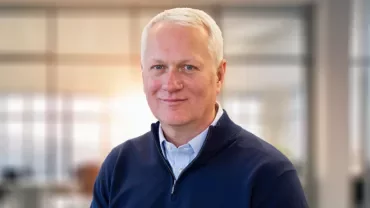
When I sat down with CHRO Hernan Rein, I asked him a simple question that many HR leaders are quietly wrestling with. What does it really take for HR to recover the initiative in today’s environment? His answer was sharp, direct and incredibly relevant for anyone leading people strategy right now.
Hernan has spent more than twenty-five years shaping high performance HR functions across private equity, Fortune 500 and complex global organizations. He has lived through intense growth cycles, high pressure environments and multiple transformations. His perspective is grounded in real experience, not theory, and it challenges the way many HR leaders show up today.
HR has spent too long reacting
According to Hernan, the HR function worked hard over the last few decades to earn a stronger seat at the strategic table. The problem is that once it arrived, it often used that platform to champion people programs that were not always tied to measurable business outcomes. After the pandemic, the balance shifted even further. HR became the team that responded to decisions rather than shaped them.
In Hernan's words, HR has been in defensive mode.
He believes it is time for HR to move back upstream. Instead of asking how to manage the impact of decisions that have already been made, HR should be asking what capabilities the organization needs to execute the strategy in the first place.
Hernan focuses on three foundational questions whenever he joins a high growth or private equity led organization. These questions belong at the very beginning of any strategy discussion.
- Do we have the right leadership team to deliver the strategy?
- Is the organisation designed for the next phase of growth?
- Are incentives aligned with the outcomes the business requires?
When HR leads with these questions early, it becomes a shaper of decisions rather than a responder to them.
Staying strategic when everything around you is on fire
Every HR leader knows what it feels like to be dragged into the issues of the day. Hernan has worked through extremely intense transformation cycles, and he is very clear that the only way to stay strategic is through discipline. Discipline about what HR owns. Discipline about what HR does not own. Discipline about what truly matters.
He shared three practices that make the shift possible.
- A clear HR operating model
Without a strong structure, everything flows to the CHRO. Hernan insists on a clear separation between strategic HR business partners, centres of excellence and operational HR services. When roles are well defined, the CHRO has the space to focus on enterprise level priorities rather than daily emergencies.
- Anchoring to a small set of business priorities
Hernan avoids long HR initiative lists. He recommends choosing three or four priorities that directly support the organisation’s strategy. Leadership capability, organizational design, talent pipeline depth and incentive alignment are often at the top of his list. Everything else becomes secondary.
- Using data to raise the conversation
Data changes the tone of the discussion. Productivity per employee, bench strength, turnover risk and similar metrics make HR a strategic partner. The conversation becomes fact based. Executives stop debating opinions and start solving real issues. Data gives HR authority.
- Rebuilding credibility in the C Suite
When I asked Hernan whether HR leaders need to rebuild confidence and credibility with their executive peers, he answered yes without hesitation. But he also pointed out that credibility is within HR’s control. It comes from the way HR communicates, the understanding it brings to the table and the solutions it proposes.
He highlighted three shifts that separate strategic HR leaders from the rest.
- Focus on outcomes, not programs
Executives care about revenue, productivity, cost structure and execution risk. HR gains influence when it connects people strategies to these outcomes in a clear and practical way.
- Understand how the business makes money
The best HR leaders understand margin drivers, market dynamics and competitive capabilities. When HR understands the commercial model, it earns the right to shape strategic decisions.
- Propose solutions instead of problems
Saying that there is a culture issue does not elevate the discussion. Reframing it as a need for a different leadership structure or a redesigned incentive approach places HR in a problem-solving position. That is where influence lives.
Where HR goes from here?
Hernan’s message is energizing and challenging at the same time. HR is standing at a turning point. It can remain reactive and continue absorbing issues, or it can recover the initiative and reassert its role as a builder of capability, performance and enterprise value.
Recovering the initiative requires earlier involvement in strategy, stronger use of data, deeper business acumen and the confidence to focus on what truly matters. Organizations that embrace this version of HR will gain a meaningful advantage in the years ahead.